Helping student accommodation providers take control
of their inventory across multiple booking channels
Project Outcomes
Users have increased their incoming revenue by an average of $30,000 per month
Real user quotes…
"This is awesome. I love how beautiful it looks. I love the colour coding. This, this is a dream"
"It just took 24h for the first booking. like Boop Bam, and each time we get we get a booking, he's (the MD) sending me an email saying, can we raise the price again? "
"This is easy! Are you sure that's it?!"
The Challenge
Our users were stuck with hotel-focused solutions or external channel managers that didn’t suit their needs. Competitor products were:
Expensive high costs for limited return
Fragmented lacking integration with student accommodation systems
Short-sighted focused mainly on short stays, ignoring the long-stay model crucial in this sector
The gap was obvious:
How might we design a centralised system that manages inventory, rates, and bookings across both short and long stays, while reducing risk and driving revenue?
Discovery: Listening to the Market
I kicked off with deep discovery work, mapping customer journeys and testing assumptions
Activities included:
Stakeholder interviews uncovering pain points around booking visibility and rate updates
Opportunity Solution Trees clarifying where we could deliver the most value
Competitor analysis highlighting limitations of hotel-centric channel managers
A few insights stood out:
Customers wanted automation, not more portals to manage
They needed to trust the system as the single source of truth
Long-stay integration was non-negotiable
My Design Journey
As the embedded designer in a team with a product manager and five software engineers, I led the design process through three key phases, while drawing on feedback from fellow designers during regular critiques
1. Exploring Options
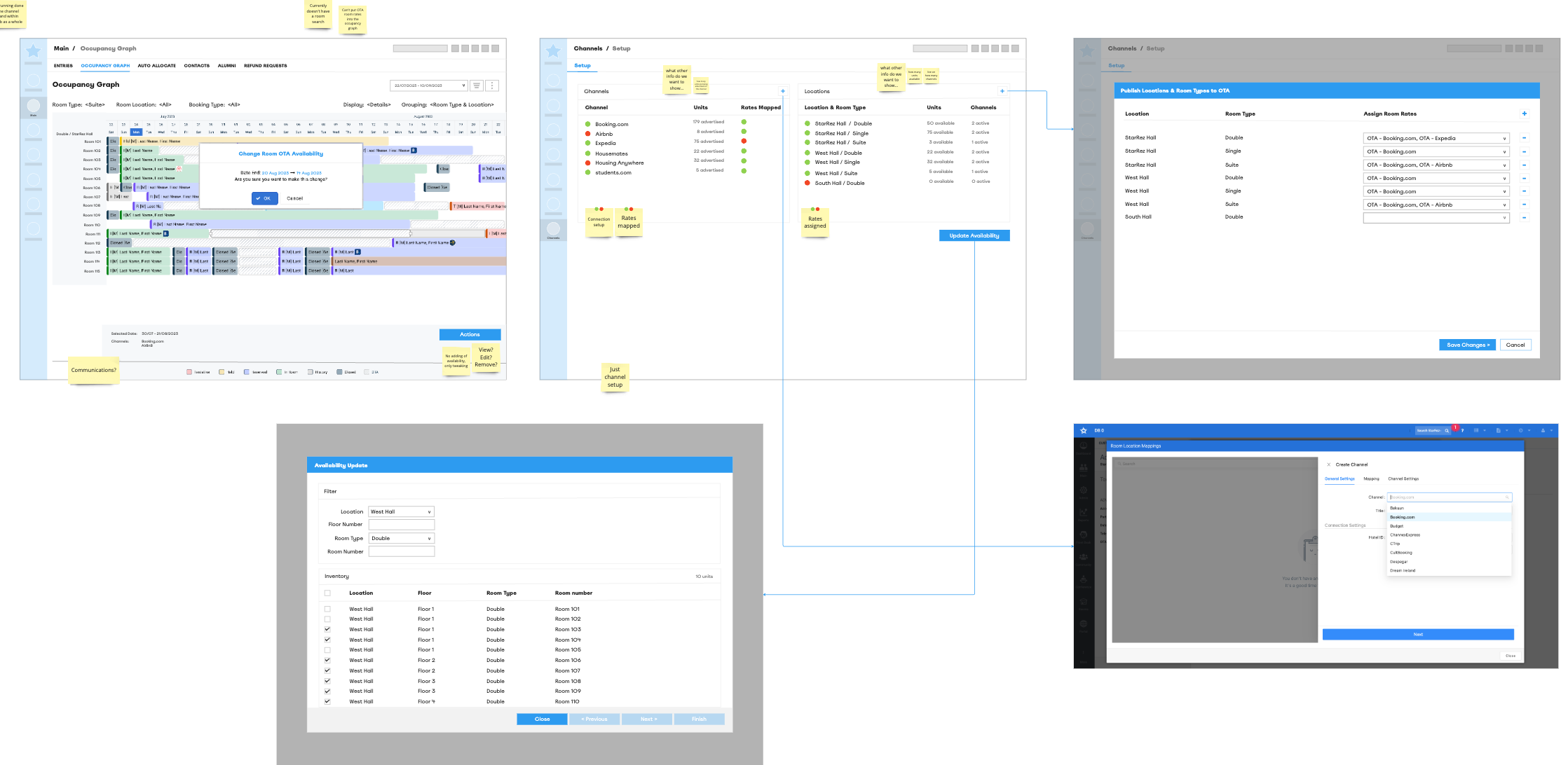
I began with low-fidelity sketches, different ways to visualise availability and manage rates. These helped us quickly test assumptions without over-investing in detail
2. Building Prototypes
Once a direction emerged, I created interactive prototypes in Figma. Early adopters validated core ideas like centralised rate management and room-type filtering
3. Testing & Iterating
Through an early adopter program, I gathered real usage feedback. Customers pushed for features like clearer booking categorisation and enhanced filtering, insights I folded back into the design
The Solution: Channels
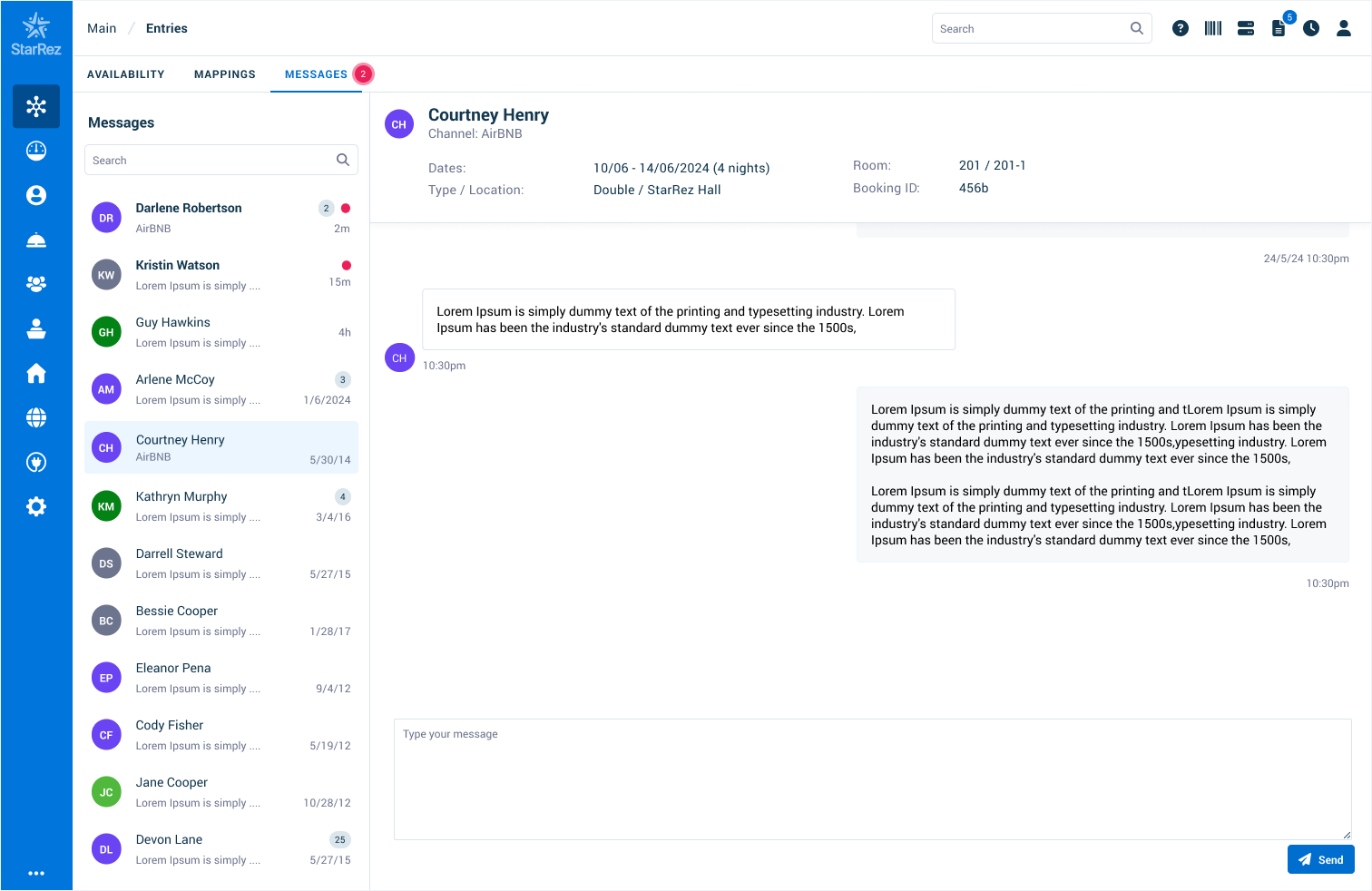
The final Channels module became the single source of truth for availability, rates, and bookings across acquisition channels
Key Features
Inventory Management Always-accurate room availability in real time
Rate Management Centralised updates across all channels
Booking Synchronisation Automatic updates and modifications from OTAs
Unified Booking Visibility Display OTA bookings alongside direct student bookings
Financial Reconciliation Track gross and net revenue by channel
The interface was designed to reduce complexity - one dashboard, one source of truth, no duplication of effort
The Impact
With Channels, property managers could finally advertise confidently without fearing double bookings or wasted admin time
Benefits for customers:
Reduced risk of cancellations and over-bookings
Streamlined operations - no more juggling spreadsheets or separate systems
Revenue growth through optimised occupancy and rate management